- Conscious Commerce
- Posts
- 🟣 Issue No. 79 Rebel Kitchen
🟣 Issue No. 79 Rebel Kitchen
Cold-pressed, chilled, and operationally painful — but it works

Kunle Campbell
December 12, 2025


wellness commerce insights
$100M BRAND STORY
The Only Real Coconut Water in UK Supermarkets
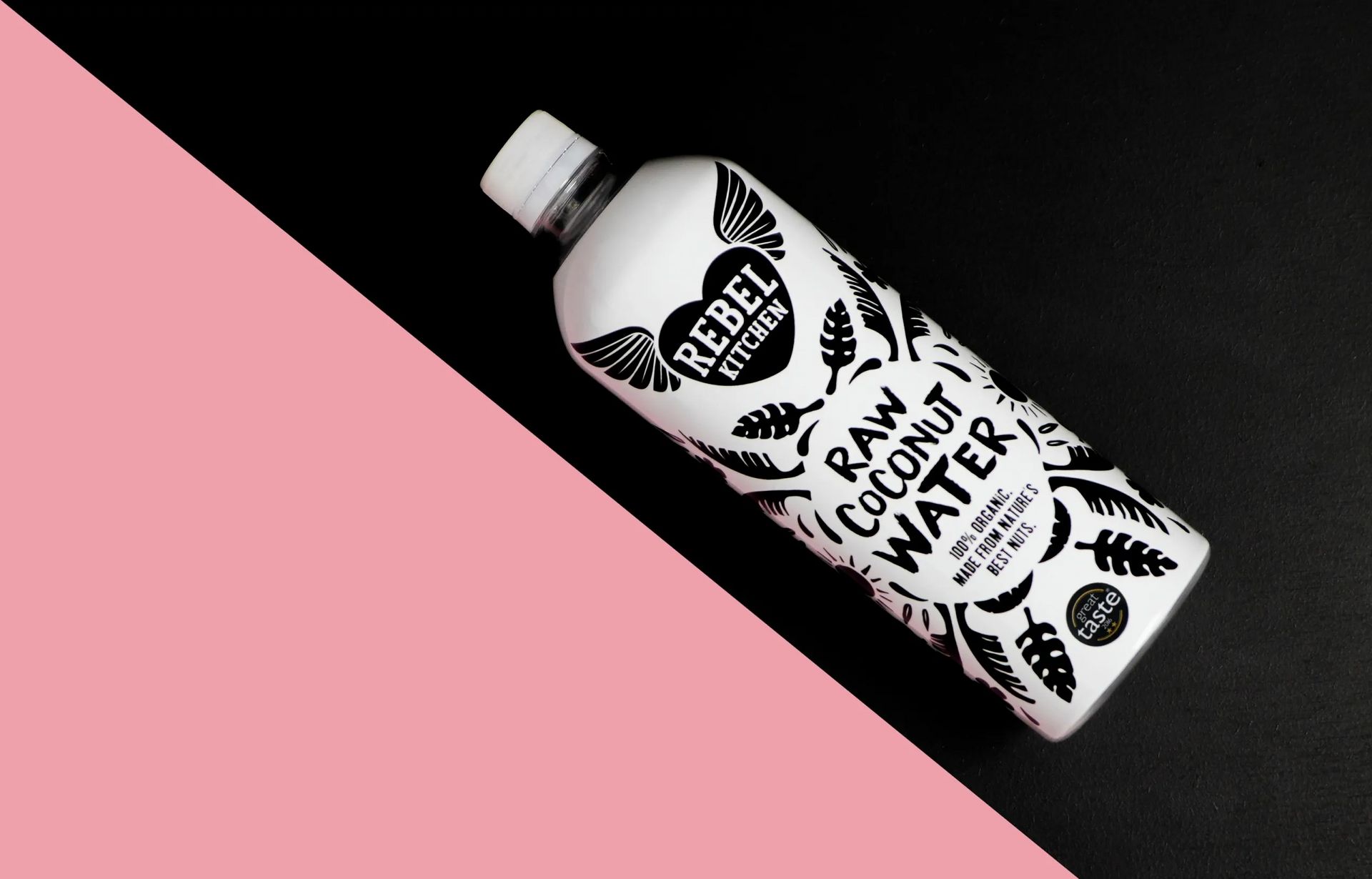
If you walk the coconut water aisle in any major UK supermarket, you’ll notice something subtle but decisive: almost everything on that shelf is shelf-stable, pasteurised, and nutritionally compromised — even when it’s sitting in a fridge.
Rebel Kitchen is the outlier.
They’re the only brand that committed fully to fresh, cold-pressed coconut water, stored in the chilled aisle because it has to be. No heat treatment. No shelf-stability theatre. Just coconut water as close as you can get to drinking it straight from the fruit.
That decision — expensive, operationally painful, and impossible to half-commit to — is why Rebel Kitchen now owns a very specific space in the category. Their signature pink hue isn’t a branding trick; it’s a visual signal of freshness and oxidation that educated consumers recognise instantly.
In a category dominated by global players optimising for scale, shelf life, and margins, Rebel Kitchen chose purity — and in doing so, carved out a moat the big brands simply won’t cross.
Are They Funded or Bootstrapped?
From the outside, Rebel Kitchen always felt like a classic revenue-led challenger brand — scrappy, values-driven, and allergic to flashy VC headlines. And for the most part, that instinct is right.
The operating business in the UK historically sat under Craze Foods Limited. If you peek under the hood, the filings tell a familiar founder story: a business that’s been capitalised primarily through founder equity, reinvestment, and later group-level backing — not a parade of traditional venture rounds.
One interesting signal is the share capital position. Over time, the company built up a meaningful share capital base (north of £9m), alongside modest share premium and deeply negative retained earnings. In plain English: this is a brand that’s been funded to grow, not one that’s been quietly spinning off profits every year. Cash has been recycled back into product, people, inventory, and expansion.
The bigger structural shift came when Rebel Kitchen became part of Nurture Brands — effectively moving from “indie insurgent” to “brand inside a plant-based portfolio.” That brought access to shared resources, distribution muscle, and capital — but also meant Rebel Kitchen’s economics became intertwined with a wider group strategy rather than standing alone.
Then in 2022, instead of turning to traditional investors, the brand leaned into crowdfunding. That choice says a lot. It wasn’t just about capital — it was about alignment. Turning customers into shareholders fit perfectly with Rebel Kitchen’s activist, community-driven DNA.
Net-net: Rebel Kitchen wasn’t bootstrapped in the purist sense forever — but it also never followed the classic VC script. Capital showed up in phases, usually tied to moments of expansion, consolidation, or community building.
Their Origin Story

Tamara and Ben had previously co-founded a food-health charity, driven by concern over industrialised food systems. But after struggling to effect meaningful change from the non-profit world, they realised that commerce offered the scale and influence needed. So they decided to build a business: not just another wellness brand, but one that could prove — on supermarket shelves — that you can deliver real taste, nutrition, and ethics.
Rebel Kitchen didn’t start as a coconut water disruptor on day one. But the founding mindset was always the same: if you’re going to make a health product, it has to actually be healthy — not just marketed that way.
As the brand evolved, coconut water became the clearest expression of that belief. The team saw what most consumers didn’t yet realise: almost all coconut water sold at scale had been heat-treated for shelf stability, stripping out nutrients and flavour in the process. It travelled well, but it wasn’t what people thought they were buying.
So Rebel Kitchen made a call most brands wouldn’t touch.
They committed to cold-pressed coconut water only, accepting shorter shelf life, chilled distribution, higher costs, and more operational complexity — all in exchange for integrity.
That choice immediately limited competition. The big players weren’t going to rewire their supply chains, logistics, and margin structures for a niche chilled SKU. Rebel Kitchen was happy to.
This is where the brand stopped being “another better-for-you drinks company” and became something sharper: a process-led brand whose differentiation lives in how the product is made and moved, not just what’s printed on the pack.
Core Customer Base
Today, Rebel Kitchen’s core customer is not defined by age or lifestyle label — it’s defined by health literacy.
These are consumers who:
Understand the difference between pasteurised and cold-pressed
Read ingredient lists and processing methods, not just macros
Care about nutrient retention, not just “natural” claims
Are willing to walk to the chilled aisle because they know why the product lives there
In practice, that includes:
Fitness and endurance consumers using coconut water for hydration
Health-conscious shoppers who’ve grown sceptical of shelf-stable wellness
Parents buying one premium hydration product they trust — not ten “healthy-looking” ones
Shoppers trading up from mass coconut water brands because taste and performance are visibly better
The earlier mylk and kids SKUs may have opened doors, but coconut water is where Rebel Kitchen earned authority. It’s the SKU that delivers disproportionate rate of sale, punches above its weighted distribution, and defines the brand in the minds of both buyers and consumers.
How Did They Grow So Sustainably? (P&L View)
Rebel Kitchen didn’t grow by trying to win the entire coconut water category. They grew by refusing to compromise on how coconut water should be made — and letting rate of sale do the talking.
Cold-pressed coconut water is brutally unforgiving. It has a shorter shelf life, higher waste risk, more expensive logistics, and zero tolerance for forecasting mistakes. But when it works, it works hard.
That’s exactly what happened with Rebel Kitchen’s 750ml chilled SKU.
Despite sitting at low weighted distribution, it consistently delivers one of the highest rates of sale in the category, adding millions in retail value while occupying a fraction of the shelf space of the big players. That’s not marketing magic — that’s buyers seeing the numbers and making room.
This is the quiet power of being the only real option in a category full of compromises.
Where most coconut water brands optimise for shelf stability, Rebel Kitchen optimised for truth — and then accepted the operational consequences. Growth followed not because they were everywhere, but because where they showed up, the product earned its keep.
Sustainability here doesn’t mean “slow.”
It means repeat-driven, buyer-trusted, and hard to dislodge.
Key Milestones
2014 — Rebel Kitchen launches with a clean-label, coconut-based drinks ethos, setting an early foundation around purity and minimal processing rather than shelf stability.
2014–2015 — Rapid entry into major UK supermarkets (including Waitrose, Ocado, and later Tesco), proving early that retail — not DTC — would be the brand’s growth engine.
2016 — Acquisition of Unoco, a raw coconut water business. This becomes a pivotal moment, giving Rebel Kitchen deep exposure to cold-pressed coconut water and accelerating its move into the chilled coconut water category.
2017–2018 — Rebel Kitchen’s fresh, chilled coconut water gains traction as a differentiated SKU, standing apart from pasteurised, shelf-stable competitors and beginning to define the brand’s identity in-store.
2019 — Rebel Kitchen merges into Nurture Brands, gaining access to broader operational infrastructure, capital, and retail relationships — enabling further scale of chilled coconut water despite higher complexity.
2022 — Launches a high-profile crowdfunding campaign, using brand activism and community alignment to fund the next phase of growth rather than relying solely on traditional capital.
2023–2025 — Rebel Kitchen’s 750ml chilled coconut water emerges as a standout performer: delivering exceptional rate of sale at low weighted distribution, becoming one of the UK’s top coconut water SKUs by revenue despite limited shelf presence — and cementing the brand as the reference for real coconut water in UK supermarkets.
Their Marketing X-Factor
Rebel Kitchen’s branding isn’t soft-sell wellness — it’s bold, slightly rebellious, and unapologetic. Starting with kids made sense not just tactically but emotionally: a mother packaging up lunchbox drinks she felt good about sending with her children. But beyond that, the messaging treated “healthy eating” as something joyful, fun and subversive — the opposite of preachy.
When they acquired Unoco and expanded, they kept the “nothing added” ethos — no refined sugar, no preservatives, no junk — and emphasised whole-food ingredients.
The 2022 crowdfunding campaign exemplifies their tone. Launching during “Februdairy” (when dairy brands ramp up marketing), they went aggressive — using provocative visuals, real-life footage of dairy processing, mobile billboards in major London spots, and social media takeovers. The goal: get plant-based supporters to feel like activists, not just consumers.
This mix of purpose-driven positioning + “attitude” gave Rebel Kitchen a distinct voice — a helpful differentiator in a white-noise health space.
Takeaways for Wellness Operators
Rebel Kitchen didn’t win by being louder, cheaper, or bigger.
They won by:
Committing fully to a process others avoided
Accepting operational pain in exchange for credibility
Letting rate of sale justify distribution, not the other way around
Choosing capital that understood why purity slows scale
This isn’t a brand that grew despite constraints.
It’s a brand that used constraints as the strategy.
If you want, next I can:
Do a final end-to-end polish so this reads as one seamless essay
Cut this into the LinkedIn abridged edition with a killer hook
Or extract a “5 operator lessons” sidebar for skimmability
Why Big Coconut Water Brands Can’t Copy This
(The real moat)
On paper, it looks simple: just launch a cold-pressed coconut water.
In reality, it’s a non-starter for most incumbents.
Cold-pressed means:
Short shelf life
Higher waste
Chilled-only logistics
Slower national rollouts
Messier forecasting
Lower margins at scale
Shelf-stable coconut water exists because it’s easy to scale globally. Switching would require rewriting supply chains, retailer agreements, and margin structures — all to serve a smaller, fussier segment.
For Rebel Kitchen, this is the strategy.
For big brands, it’s a margin nightmare.
That’s why the chilled aisle stays uncontested.
And that’s why Rebel Kitchen’s pink-hued bottles keep converting shoppers who realise, often for the first time, what coconut water is supposed to taste like.