- Conscious Commerce
- Posts
- 🟣 Issue No. 77: Form Nutrition
🟣 Issue No. 77: Form Nutrition
The whitespace strategy every wellness founder should study.

Kunle Campbell
November 27, 2025


wellness commerce insights
$100M BRAND STORY
Form Nutrition: The Plant-based Performance Brand that Made Protein Aspirational.
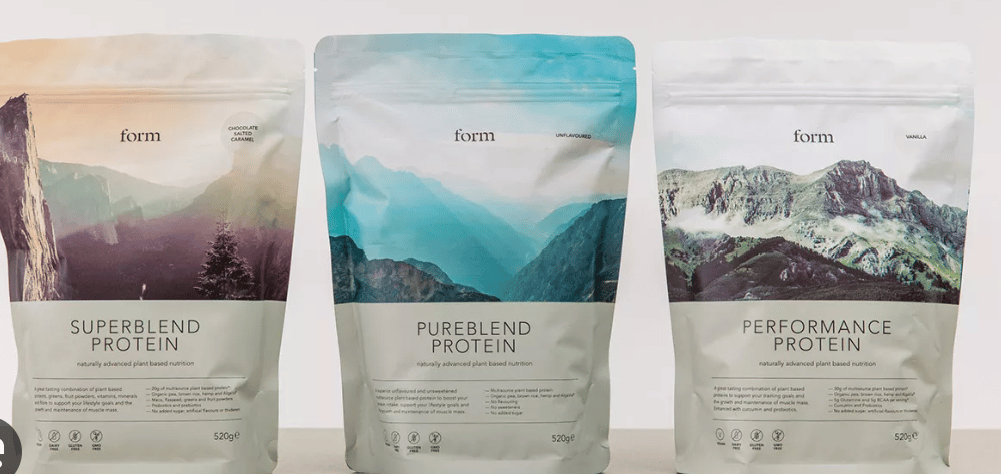
Form Nutrition entered the protein market when “vegan protein” mostly meant chalky texture and neon gym tubs. Rather than compete on macros, Form built a holistic performance brand designed for taste, mindfulness, and mission.
A major turning point was early press coverage—Form launched with momentum thanks to features in publications like Vogue, GQ, and The Telegraph, as discussed in this Practical Ecommerce interview.
With plant-based nutrition exploding, Form created a new lane: performance for everyone, supported by design, purpose, and real nutritional science.
Are They Funded or Bootstrapped?
Form started lean. Damian Soong and Natalia Bojanic funded the brand themselves, avoiding typical VC pressure. As Damian explains in this founder conversation, they turned down early investment because they didn’t want to chase vanity growth metrics.
Two years in, they accepted a small investment from a multi-generational family office—patient capital that aligned with brand integrity, not hypergrowth.
Most of their scaling was funded by smart supplier relationships, not dilution.
Their Origin Story
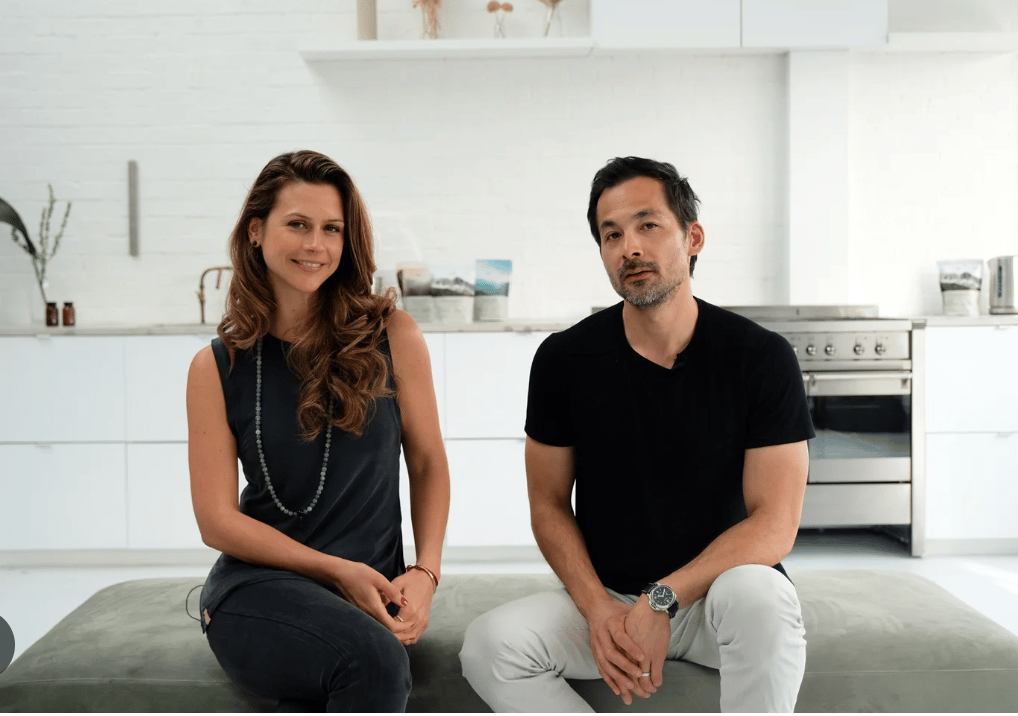
The spark came in 2015 when Damian noticed that every plant-based protein tasted awful and looked worse. He described as,
“You had big plastic gym-bro tubs on one end, and earthy hippie powders on the other. Nothing spoke to a performance-minded, design-driven consumer.”
Natalia, coming from luxury PR and mindfulness, helped shape Form into a brand that blended nourishment, design, and consciousness.
The founders spent 18 months in R&D, improving taste, texture, and formulation. Their vision was clear from the start: redefine nutrition as a premium, mindful, lifestyle experience.
Their Feeding Fund donating meals for every product sold—came from the philosophy that “thinking about nutrition this deeply is a privilege.”
Core Customer Base
Form’s core user isn’t a bodybuilder—it’s the modern wellness consumer:
Health-conscious professionals
Design-oriented shoppers
Plant-forward individuals
High-intent DTC customers, many discovering Form via early Instagram education
Form built an Instagram audience for a full year before launch, creating demand before the first product shipped.
What keeps customers loyal:
Great taste (rare for early vegan protein)
Beautiful packaging
Trusted nutrition content
Mission alignment
A uniquely rich unboxing experience
How Did They Grow So Sustainably? (P&L View)
Form’s scaling didn’t rely on blitz-scaling—it relied on operational discipline and creativity.
1. Supplier Terms as Financing
Damian explained in this interview that he negotiated low MOQs and good payment terms, effectively allowing suppliers to finance the business.
2. DTC First, High-Signal Retail Second
Form launched DTC, then expanded into highly curated retailers like Selfridges, Harrods, and Planet Organic. The logic behind this selective approach was outlined in their Welltodo talk.
3. Content > Paid Media
Their early growth came from educational Instagram content—not ads.
4. Post-Purchase Magic
Their personalized recipe booklet—tailored to each SKU by building a custom variable-data printing system into their 3PL workflow. It became a cult-favorite retention tool.
5. Balanced Channel Mix
They intentionally kept DTC at ~70% and wholesale at ~30%. This reduced channel risk and diversified customer acquisition.
Key Milestones
Here’s a quick timeline, with source links:
2016 — Form builds an IG community before launch
2017 — Official launch with major press coverage
2017 — Feeding Fund launches
2018 — Strategic family-office investment
2020 — U.S. expansion begins
2021+ — Placement in Soho House, Equinox Hotel, Planet Organic
Their Influencer Marketing Mix
Form avoided macro influencers. Instead, they leaned into:
Nutritionists and mindful lifestyle creators
High-signal placements like Soho House
UGC from design-conscious customers
Their earned media famously outperformed paid channels.
Their Marketing X-Factor
1. Aesthetic Differentiation
They designed their packaging to be something you’d “want to leave on your kitchen counter.”
2. Broader Definition of Performance
Form speaks to the entrepreneur, the parent, the creator—not just athletes.
3. Mission-Infused Products
Their Feeding Fund gives every SKU a purpose.
4. Education as a Brand Pillar
Their “inform, don’t push” approach is a recurring theme in all interviews.
Takeaways for Wellness Operators
1. Crowded markets are opportunities if your POV is different.
Form entered a saturated market and still created whitespace.
2. Operational creativity beats big rounds.
Their supplier-driven financing model which helps them get a near negative cash-conversion-cycle.
3. Content compounds.
A year of pre-launch content gave Form a warm start.
4. Personalization doesn’t need to be expensive.
Form built a variable-data printed insert system that customizes each order’s recipe booklet based on the exact product and flavour a customer buys.
5. Choose retailers for signal—not scale.
Partnering only with high-signal retailers—places like Selfridges, Harrods, and Soho House—that reinforced the brand’s premium positioning rather than dilute it. They used wholesale for credibility and discovery, not volume, keeping it intentionally limited so DTC remains the economic engine of the business.
How to Win With Meta’s New Algorithm (The Andromeda Playbook)
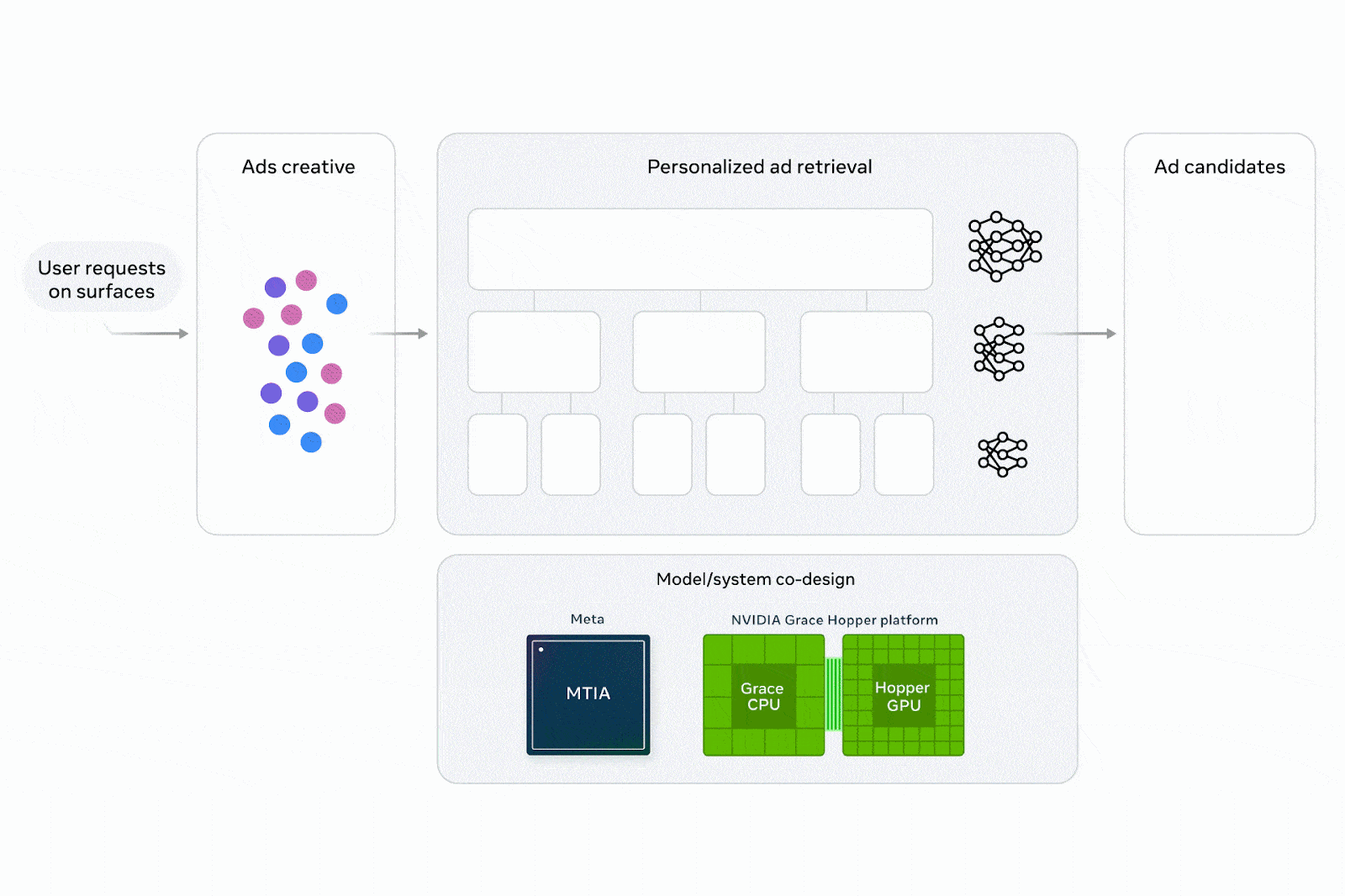
If your Meta Ads performance suddenly dipped, you’re not alone.Meta just rolled out one of its biggest algorithm updates ever — Andromeda.
This isn’t a tweak or a small adjustment. It’s a complete rebuild of how Meta decides which ads get shown to which people.
Lately, there’s been endless chatter about the Andromeda update across social media — but a lot of it’s noise.
DTC Daily sifted through hundreds of posts and distilled what the top experts are actually saying into one clear, practical playbook that explains:
Why old “winning ads” die faster than ever
How Meta reads your creative for signals
The 4-Source System to generate infinite new ad ideas
Read the full Andromeda Playbook
-------------------------
This guest post was written by DTC DAILY. They share 3 bite-sized, curated strategies in each issue that you can implement today. If you found this tip helpful, subscribe to Dtc Daily
